
 Canadian Dollar (CAD)
 Euro (EUR)
 British Pound (GBP)
Prescription Sports Goggles for Ice Hockey: Clear Vision and Eye Protection
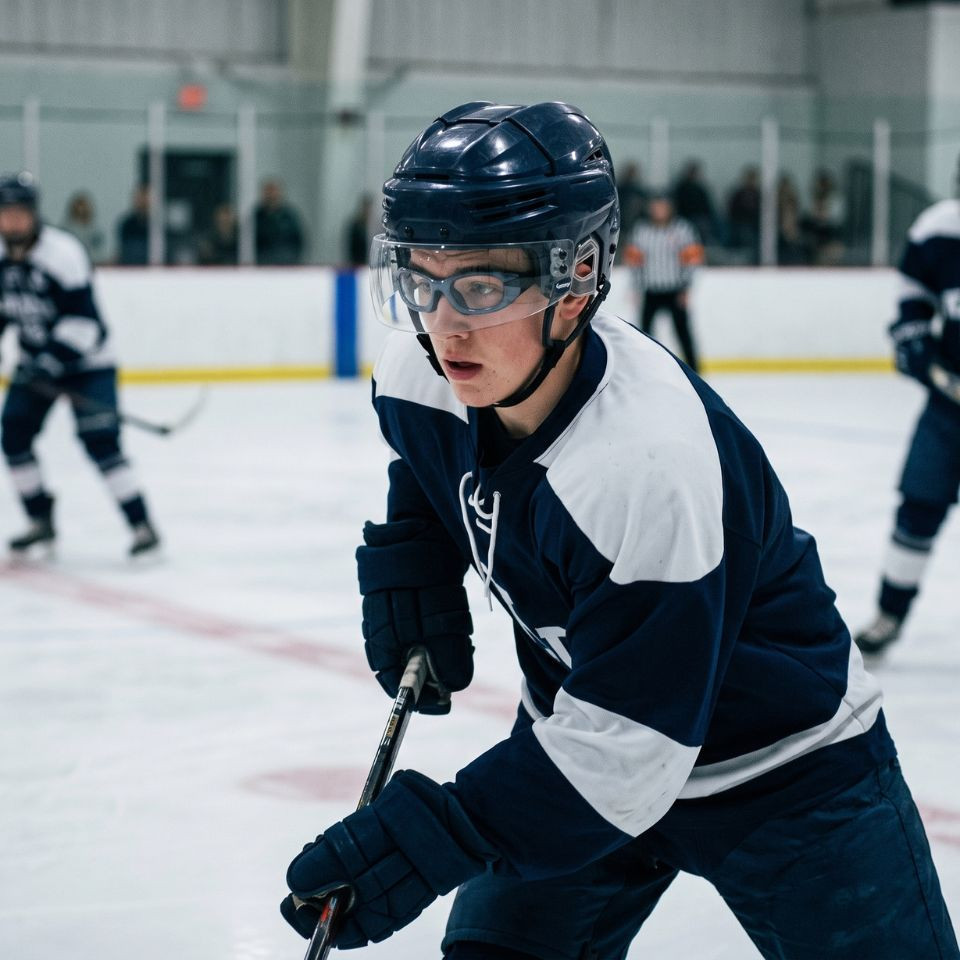
Ice hockey moves fast. A player may be tracking the puck one second, looking for an open teammate the next, and reacting to a defender almost immediately afterward. Skating speed, quick passes, sticks, boards, helmets, and a hard puck all combine to create a sport where players need to see clearly and react quickly.
For athletes who normally wear corrective lenses, that makes vision an important part of their hockey equipment. Playing without a needed prescription may make it harder to track the puck, judge distance, read developing plays, or recognize movement around the rink. At the same time, ordinary everyday glasses are not necessarily designed for the movement, helmet fit, and impact risks associated with ice hockey.
That is where prescription ice hockey goggles and helmet-friendly prescription sports eyewear can help. At Goggles N More, players and parents can shop for prescription hockey eyewear designed with athletes in mind, including options for children, teenagers, and adults.
Whether your player is taking the ice for the first time or has spent years competing, clear vision should be considered part of the overall hockey setup.
Why Clear Vision Matters in Ice Hockey
Vision affects almost every part of the game. A hockey player is rarely looking at only one object. Players constantly move their eyes between the puck, teammates, opposing players, the net, the boards, and open ice.
During a single shift, a player may need to:
- Track a puck moving rapidly across the ice.
- Follow passes through traffic.
- Recognize teammates using peripheral vision.
- Judge how quickly another player is approaching.
- Read the position of the goalie.
- Identify an open passing lane.
- Watch for players near the boards.
- React to rebounds and deflections.
- Read numbers and positioning from across the rink.
- Adjust instantly as the play changes direction.
If an athlete normally relies on prescription glasses to see clearly, removing that correction during a hockey game can create an unnecessary challenge. Prescription hockey goggles allow players to bring their corrective vision onto the ice in eyewear designed for active use.
Regular Glasses and Hockey Sports Eyewear Are Not the Same Thing
Everyday eyeglasses are primarily designed for normal daily activities. They may work perfectly well in a classroom, at work, or around the house, but hockey creates a very different environment.
Players accelerate, stop suddenly, pivot, turn their heads quickly, make contact with other players, and wear helmets and other protective equipment. Regular eyeglass frames may shift, press against the sides of a helmet, or simply feel uncomfortable during active play.
Sports eyewear is designed around movement. Depending on the specific model, features may include impact-resistant materials, secure straps, flexible components, padding, or temple designs intended to work more comfortably underneath a helmet.
It is important, however, to choose eyewear specifically identified as appropriate for hockey rather than assuming that every pair of sports goggles can be used for every sport. Different sports create different impact risks. Players and parents should always confirm that the eyewear they choose is appropriate for ice hockey and compatible with the player's required helmet and face protection.
Prescription Hockey Goggles Do Not Replace Required Face Protection
Prescription eyewear and hockey protective equipment perform different jobs.
A player's required helmet, cage, visor, shield, or face protection should always meet the applicable league and equipment requirements. Prescription sports glasses worn underneath that equipment provide vision correction and may add another layer of protection, but they should not be considered a substitute for required hockey face protection.
This distinction is especially important when shopping for younger players. The goal is to create a complete system in which the helmet, face protection, and prescription eyewear work comfortably together.
Helmet-Friendly Hockey Glasses Can Improve Comfort
One of the biggest challenges for players who wear glasses is fitting everything comfortably underneath a hockey helmet.
Traditional glasses usually have temple arms that extend alongside the head and behind the ears. When a helmet presses against those arms, the result can be uncomfortable pressure around the temples or ears.
Helmet-friendly sports eyewear is designed with this problem in mind.
For example, Goggles N More offers Progear sports goggles and other prescription-ready sports eyewear in sizes for different age groups.
The best frame is not necessarily the one that looks best by itself. For hockey, the ideal frame is one that works comfortably with the player's entire equipment setup.
Prescription Ice Hockey Goggles for Kids
Young hockey players may benefit especially from sport-specific prescription eyewear because children are still developing their skills and learning to process everything happening around them.
A young player needs to watch the puck while also learning positioning, skating, passing, shooting, spacing, and teamwork. If that child normally wears glasses, clear vision during practices and games can make the experience much easier.
Parents should consider the same questions when selecting kids prescription hockey goggles that they consider when buying the rest of a child's equipment:
- Does the eyewear fit the child's face correctly?
- Does it stay securely in position?
- Does it work comfortably with the child's helmet?
- Is it specifically appropriate for the sport?
- Is the prescription current?
- Can the child see comfortably in all directions?
Goggles N More offers hockey eyewear for younger athletes, including Rec Specs and Progear prescription sports options in youth sizing. Because children's faces and prescriptions can change as they grow, parents should recheck fit from season to season instead of automatically assuming last year's eyewear still works.
Prescription Hockey Eyewear for Teens and Adults
Prescription vision does not stop being important when a player gets older. Teen and adult hockey players may need stronger prescriptions, different frame dimensions, or larger eyewear designed for an adult face.
Goggles N More offers a dedicated selection of adult prescription ice hockey glasses, including helmet-friendly models for older teens and adults.
For example, the Rec Specs F8 Helmet Spex XL is designed for older teens and adults and is specifically described as being designed for better fit beneath a helmet. Progear also offers larger sports-goggle sizes for teens and adults.
The variety matters because eyewear that is too narrow can create pressure, while a frame that is too wide may move around or interfere with other equipment.
Impact-Resistant Materials Matter in Sports Eyewear
Hockey includes fast-moving equipment and physical contact, so lens material is an important consideration.
Polycarbonate is commonly used in protective sports eyewear because it offers high impact resistance while remaining relatively lightweight. Sports eye-safety organizations recommend sport-appropriate protective equipment and emphasize that regular prescription glasses should not be treated as a replacement for proper sports eye protection.
When selecting ice hockey prescription glasses, do not assume that any pair of prescription sports glasses will automatically be appropriate for hockey. Check the manufacturer's product information, relevant safety standards, and compatibility with required hockey equipment.
Finding the Right Fit for Hockey Goggles
Fit is just as important as the prescription itself.
Start With the Player's Face Size
Children, teens, and adults need different frame widths. Goggles N More organizes many sports eyewear products by age and frame dimensions, making it easier to narrow down appropriate choices.
Test the Eyewear With the Hockey Helmet
Never evaluate hockey glasses only while standing in front of a mirror without a helmet. Put on the eyewear, helmet, and face protection together.
The helmet should not force the eyewear downward, squeeze the temples excessively, or shift the frame when the player moves their head.
Check Peripheral Vision
Hockey players need awareness of activity happening beside them as well as directly ahead. Make sure the frame does not unnecessarily interfere with peripheral vision.
Make Sure the Frame Stays Secure
A player should be able to turn quickly, skate aggressively, and move their head without constantly repositioning their glasses.
What About Fogging on the Ice?
Fogging is a common complaint with sports eyewear, especially when moving between a warm locker room and a cold rink.
Moisture from sweat and body heat can collect on colder lens surfaces and create condensation. Proper ventilation, lens coatings, frame design, and helmet fit can all influence fogging.
Players should follow the care instructions provided with their eyewear and avoid using household cleaners or abrasive materials that could damage lens coatings.
When ordering prescription lenses, it can also be useful to review available anti-fog and lens-treatment options.
Why Prescription Accuracy Is Important for Hockey Players
A great sports frame cannot compensate for an outdated prescription.
Before ordering prescription hockey eyewear, make sure the athlete has a current prescription from an eye-care professional. Goggles N More requires prescription information when creating customized Rx lenses, including measurements such as pupillary distance when applicable.
This is especially important for children because their prescriptions may change as they grow.
If a player has been complaining that the puck looks blurry, signs are difficult to read across the rink, or objects appear less sharp than they used to, it may be time for an updated eye examination before ordering new hockey eyewear.
What About Contact Lenses for Hockey?
Some hockey players prefer contact lenses because they eliminate the need for prescription glasses underneath a helmet. Contacts can be a practical choice for many athletes, but they do not provide physical eye protection.
A player using contacts must still wear all required hockey eye and face protection.
Contacts may also not be comfortable for everyone. Some athletes experience dryness or simply prefer not to wear them. Children may not yet be ready to manage contact lenses independently.
For those players, prescription hockey goggles and helmet-friendly prescription glasses provide another option.
Why Shop for Ice Hockey Goggles at Goggles N More?
One of the advantages of shopping with Goggles N More is that prescription sports eyewear is a major focus of the company rather than a small section hidden inside a general eyewear store.
Goggles N More organizes eyewear according to sport and maintains a dedicated Ice Hockey Prescription Glasses & Sports Goggles collection.
The current hockey selection includes prescription-ready products from brands such as Rec Specs by Liberty Sport and Progear, with choices for children, teenagers, and adults.
Customers can compare frame sizes, prescription options, strap or temple designs, and helmet-friendly models instead of trying to adapt everyday eyewear to the demands of hockey.
For families, that can also make shopping easier. A child may need one size now and a larger model in a future season, while parents or older siblings who play hockey may require adult sizing. Having multiple prescription sports options in one place makes it easier to find eyewear based on the player's actual needs.
Make Vision Part of the Hockey Equipment Checklist
Before a hockey season begins, players routinely inspect their equipment. Skates are sharpened. Helmets are checked. Gloves, pads, sticks, and uniforms are replaced when necessary.
Eyewear deserves a place on that checklist too.
Before returning to the rink, ask:
- Is the player's prescription current?
- Does the eyewear still fit correctly?
- Does it fit comfortably with the current helmet?
- Is the frame specifically appropriate for hockey?
- Are the lenses scratched or damaged?
- Can the player see comfortably in all directions?
- Does the eyewear remain stable during movement?
A few minutes spent checking eyewear before the season can help prevent unnecessary frustration once practices and games begin.
See the Puck, Read the Play, and Stay Focused on the Game
Hockey happens too quickly for players to spend time thinking about their glasses.
The ideal eyewear should allow an athlete to concentrate on skating, positioning, passing, shooting, defending, and watching the puck—not on whether their glasses are slipping or whether they can clearly see what is happening across the rink.
For athletes who require corrective lenses, prescription ice hockey goggles and helmet-friendly hockey glasses provide a practical way to bring clear vision onto the ice.
From youth players learning the basics to teenagers and adults competing at higher levels, properly fitted prescription sports eyewear can become an important part of the complete hockey setup.
Explore the prescription ice hockey goggles and glasses at Goggles N More and find eyewear designed around clear vision, active movement, comfortable helmet fit, and the demands of the rink.
Because when the puck drops, your focus should be on the next play—not your glasses.
Newest Guide & Blog Updates
Prescription Sports Goggles for Ice Hockey: Clear Vision and Eye Protection
Ice hockey moves fast. A player may be tracking the puck one second, looking for an open teammate th...

Stay Protected and See Clearly with Prescription Snowmobile Goggles
Snowmobiling combines speed, cold temperatures, changing terrain, wind, and flying snow into one exh...
Snowledge Ski Goggles and Prescription Inserts: Winter Vision Without Compromise
The right ski goggles have an important job. They need to protect your eyes from wind and snow, help...

Prescription Ski Goggle Inserts: Turn Your Favorite Snow Goggles Into Rx Goggles
If you wear glasses every day, heading to the ski slopes presents an obvious question: how are you g...
Magnetic vs. Photochromic Ski Goggles: Which Winter Lens System Is Right for You?
If you have shopped for ski or snowboard goggles recently, you may have noticed that winter eyewear...
Prescription Ski Goggles and Inserts: See the Slopes Clearly
A great day on the mountain can include bright sunshine, blowing snow, flat light, deep shadows, icy...